
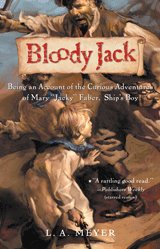
 In recent months I have fallen madly in love with one particular audiobook series that I am currently praising above all others. There are so far six books in the Bloody Jack series written by Maine author L.A. Meyer, with the seventh book (Rapture of the Deep) coming this August. I recently finished listening to the audio edition of the series’ fifth book (Mississippi Jack) produced by Listen and Live Audio and am now chomping at the bit for the audio of the sixth to arrive so my fun can continue.
Lest you think I’m the only one enamored with the experience of listening to these books, consider that the second in the series, The Curse of the Blue Tattoo, is becoming one of the best-decorated audio books out there, having already received three Audie Awards (best solo female narrator, distinguished achievement in production, and best book for teens), an Odyssey Honor Award, and an Earphone Award from Audiofile magazine, to name just a few. Read by the remarkably talented Katherine Kellgren, each book in this series is a rollicking adventure starring one Mary "Jacky" Faber, who is one of the pluckiest and most entertaining girls I’ve encountered in fiction — a girl, I might add, who is not at ALL too ladylike as to be unappealing to boys. (Just ask my fiancé, who is also greatly enjoying this series.) Jacky is clever, resourceful, charming, funny, talented in countless ways, and completely fallible. Try as she might, she cannot resist the temptations of a good mystery, a profitable scam, or (it’s true) a rogueish and handsome young man, affording Mr. Meyer ample opportunities for some infuriatingly fun storytelling — the kind that finds readers shaking their heads and grinning with anticipation: "Oh, dear. Here she goes again… How WILL she get herself out of this one??"
In the first book of her adventures, Bloody Jack (also the recipient of an Odyssey Honor Award and an Audie Award), Jacky, whose early years are spent begging on the streets of London, dons boys’ clothing and lands a job as a ship’s boy for a Royal Navy ship. While on board the H.M.S. Dolphin she has numerous nautical adventures, each of them punctuated with a degree of historical detail that both enriches the story and educates landlubbers about life on the high seas.
In the second account of Jacky’s adventures, The Curse of the Blue Tattoo, the city of Boston and social expectations for "proper ladies" take center stage, as Jacky is enrolled at the Lawson Peabody School for Girls, located in Beacon Hill. I, for one, feel fully prepared now to offer tours of "Jacky Faber’s Boston," having learned so much about the various bits and pieces of the city from reading this book: "Ah, there’s where Jacky rode her horse through the Common, going much faster than befitted a proper lady. Ah, there’s where Jacky spent many a night singing and dancing in the tavern known as The Pig and Whistle, unbeknowst to Headmistress Pim…" (And so on.) You can see a map of the Boston locations Jacky visited (or frequented) in 1803 on L.M. Meyer’s web site.
Books 3, 4, and 5 continue Jacky’s adventures, with her returning, in each book, to some type of boat, on some body of water, in some piece of the world. Book 6 finds her "behind enemy lines" in Paris, where I know she is going to find plenty of ways to get into trouble, and I’ll find plenty of reasons to love her all the more. And as for Book 7, well… we shall soon see!
Despite her faults (and perhaps because of them), Jacky herself provides a positive role model, as do a great number of the men and women in her very diverse coterie. From lovable pickpockets to truly terrible sailors, there are so many characters to love in these books, and so much to say about their "human" qualities and depictions here as three-dimensional. An eighth grade girl I recently introduced to this series proclaimed two weeks ago that the number one object of Jacky’s affections was "positively dreamy" — a statement I am curious to see if she rescinds once she has read far enough to find that he, too, is very much human and (darn him!) very much a boy. Will the fact that he’s believable make him any less dreamy in her eyes? We shall soon see.
I personally love the man who becomes Jacky’s attendant or "butler" of a sort. He is upstanding, respectable, and perfectly charmed by Jacky’s wily ways, even as he does his best to protect her from them. The fact that he’s so steadfast makes me like him immensely. The fact that he is a homosexual makes me rejoice in his very presence on these pages. (What?? A gay person in historical fiction??) My hat’s off to L. M. Meyer for acknowledging there were gay people in history, some of them likeable, some not. While he’s tossing that bit of reality into the mix, he opens unexpected windows onto other historical truths less often acknowledged in books for young readers: Yes, there were church-goers of bad moral character and prostitutes of good. Yes, some black people happily profited from the slave trade. Yes, the world is home to pick-pockets with hearts of gold and pirates a girl can’t help but love. These are stories, in other words, that feature actual PEOPLE, cut from a wide variety of cloths and not just shaped by stereotypes. How delightfully refreshing!
Because Jackie finds herself in occasional "heavy petting" situations and is, in at least once instance, endangered by a man wanting a good deal more than that, this series is probably best for ages 13 and up. I think it would be just fine for seventh graders, or mature sixth graders who don’t have especially squeamish parents, and it is certainly all right for adults, who I may find themselves enjoying it every bit as much as their teenagers — and possibly even more!
 Literary little brothers are a special breed. They may act as wide-eyed witnesses to the shenanigans of older siblings (like John in The Great Brain books; see note below), or may be the main mischief-makers themselves (Judy Blume’s indomitable Fudge). Sometimes they try to compete with the older sibling (Julian’s little brother, Huey, in Ann Cameron’s chapter book series); sometimes, they find a way to forge their own identity quite independently (Judy Moody’s little bro, Stink; Buster in Richard Peck’s Fair Weather).
 "Professor Frobisher couldn’t believe he had missed seeing it for so long—it was, after all, right there under his nose—but in all his years of research into the intricate and mysterious ways of the universe, he had never noticed that the freckles on his upper lip, just below and to the left of the nostril, partially hidden until now by a hairy mole he had just removed a week before, exactly matched the pattern of the stars in the Pleiades, down to the angry red zit that had just popped up where he and his colleagues had only today discovered an exploding nova." —Ray C. Gainey, Indianapolis, Indiana (1989 winner)
 "The bone-chilling scream split the warm summer night in two, the first half being before the scream when it was fairly balmy and calm and pleasant for those who hadn’t heard the scream at all, but not calm or balmy or even very nice for those who did hear the scream, discounting the little period of time during the actual scream itself when your ears might have been hearing it but your brain wasn’t reacting yet to let you know." —Patricia E. Presutti, Lewiston, New York (1986 winner)
 And this: "They had but one last remaining night together, so they embraced each other as tightly as that two-flavor entwined string cheese that is orange and yellowish-white, the orange probably being a bland Cheddar and the white . . . Mozzarella, although it could possibly be Provolone or just plain American, as it really doesn’t taste distinctly dissimilar from the orange, yet they would have you believe it does by coloring it differently. —Mariann Simms, Wetumpka, Ala. (2003 winner)
 On his
  Instead of the acrobatics of Bulwer-Lytton entries like the examples above, Cadre looks for sentences like this: "’Jennifer stood there, quietly ovulating.’" He succinctly articulates why the sentence is so bad: "The non-action of ‘stood,’ the vagueness of ‘there,’ the involuntary process of ovulation treated as an activity, the inappropriateness of mentioning the volume of that non-activity, the uncomfortably gynecological detail of mentioning it at all — all combine to make a cringeworthy sentence. And since it’s only five words long, its impact is instant; you don’t have readers slogging through clause after clause after clause."
 2009— "The mighty frigate Indestructible rounded the Horn of Africa and lurched east’ard." —Pete Wirtala
 s, especially parents like the moms above, would do well to get the same books as their kids, so they have the same frame of reference. It’s funny: The Care and Keeping of You: The Body Book for Girls, from American Girl Library, is almost always purchased by the good customer who confides that her daughter is carrying an odor for the first time. Many girls have been known to secret this book away while simultaneously asking for better shampoo and deodorant. American Girl added a new book to this series with Is This Normal?: Girls’ Questions, Answered by the Editors of The Care & Keeping of You which tackles some of the harder questions, i.e. embarrassing, that girls have with the onset of puberty.
  y. The friendly cartoons do much to take the uncomfortableness out of talking frankly about sex. The book is newly updated to include a chapter on being safe on the Internet; this new updated version comes out in the beginning of September. Robie has added to the original book with It’s NOT the Stork: A Book About Girls, Boys, Babies, Bodies, Families and Friends for younger kids. This book really just answers the age-old question that still makes some parents squirm: "Where do babies come from?" And then when parents are ready for a little more there’s It’s So Amazing!: A Book About Eggs, Sperm, Birth, Babies, and Families.
 s on getting younger boys and girls ready for the changes of puberty. Full of real information and questions from real kids, this book can help start the "what is puberty going to be like?" questions.




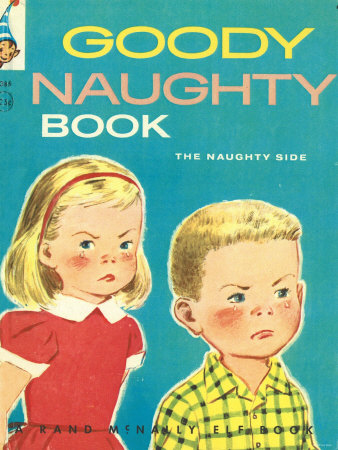

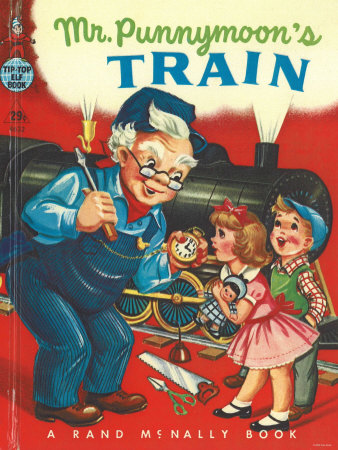

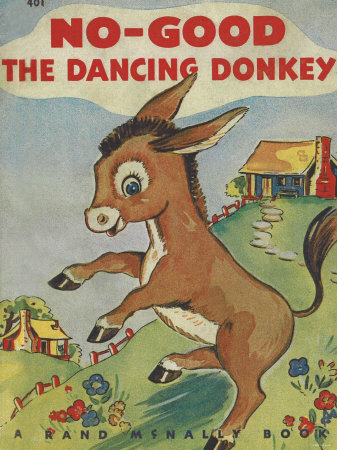

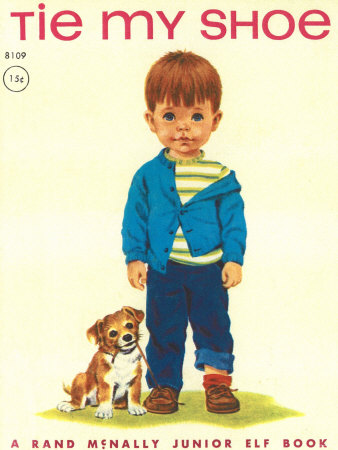


 The story hour was loads of fun and it culminated in a very cute craft activity, lead by Elizabeth, but organized by Titcomb’s Story Hour Queen, Edye, who had all the crafts ready to go — the sign of a real children’s bookseller is always having red fabric balls and glue on hand to make dog noses. All the participants had a grand time.
 while I explored all the loveliness that is
  Titcomb’s. The store carries a mix of old and new books. The old books all seemed like treasures and I found myself having just walk away before I spent all my money. I was smitten with the sidelines area. It was full of interesting, fun and educational toys, puzzles and games that I hadn’t seen yet.